58
Waste
DolphinEnergy’s facilities generate
domestic non-hazardouswaste for
which disposal ismanaged by the local
municipalities. Thenon-hazardous
industrial waste, includingalumina catalyst
and activated carbon, is sent to land filling
sitesmanaged by private contractors
under awastemanifest. The hazardous
waste includes liquidwaste oil and solid
waste such as soiled sulphur, process
sludgeand process filters. The liquidoil is
sent for recyclingand the solid hazardous
material is separated and stored in
engineered temporary hazardous storage
facilities pending availability of permanent
government treatment andprocess
facilities.
Officewaste includes paper, toners, tin
cans, plastic products, organicmaterials
from food, and other items. To reduce
officewaste, DolphinEnergy has
implemented anofficewaste recycling
program. Since 2003, the company
has recycledalmost 107 tons of paper,
equivalent to saving 1,800 trees. In
addition to paper product recycling, toners,
aluminum cans and plastic products have
been collected on daily basis, resulting
in35 tons of plasticwaste, 1,400 toner
cartridges and900kg of cans being
recycled. The programwas accompanied
withaparallel communicationplan to raise
awareness among the staff on how and
where todispose the different types of
waste.
This programwas first implemented
inKuwaitoperations, followed byQatar
operation to includeDolphinTower in
Dohaand the plant and project site inRas
Laffan Industrial City. In 2010Dolphin
Energy plans to extend the program to
its offices inAl Khor city. Ingeneral,
the recycling industry is still in the very
early stages inbothQatar andKuwait, but
serviceavailability is steadily improving
and the companywill continue to support
new recycling initiatives as they become
available - e.g. batteries.
DolphinEnergy also implements
measures to reduce the risk of spills and
gas releases, andmitigate the negative
environmental impacts should any
incidence of spill and/or gas release occur.
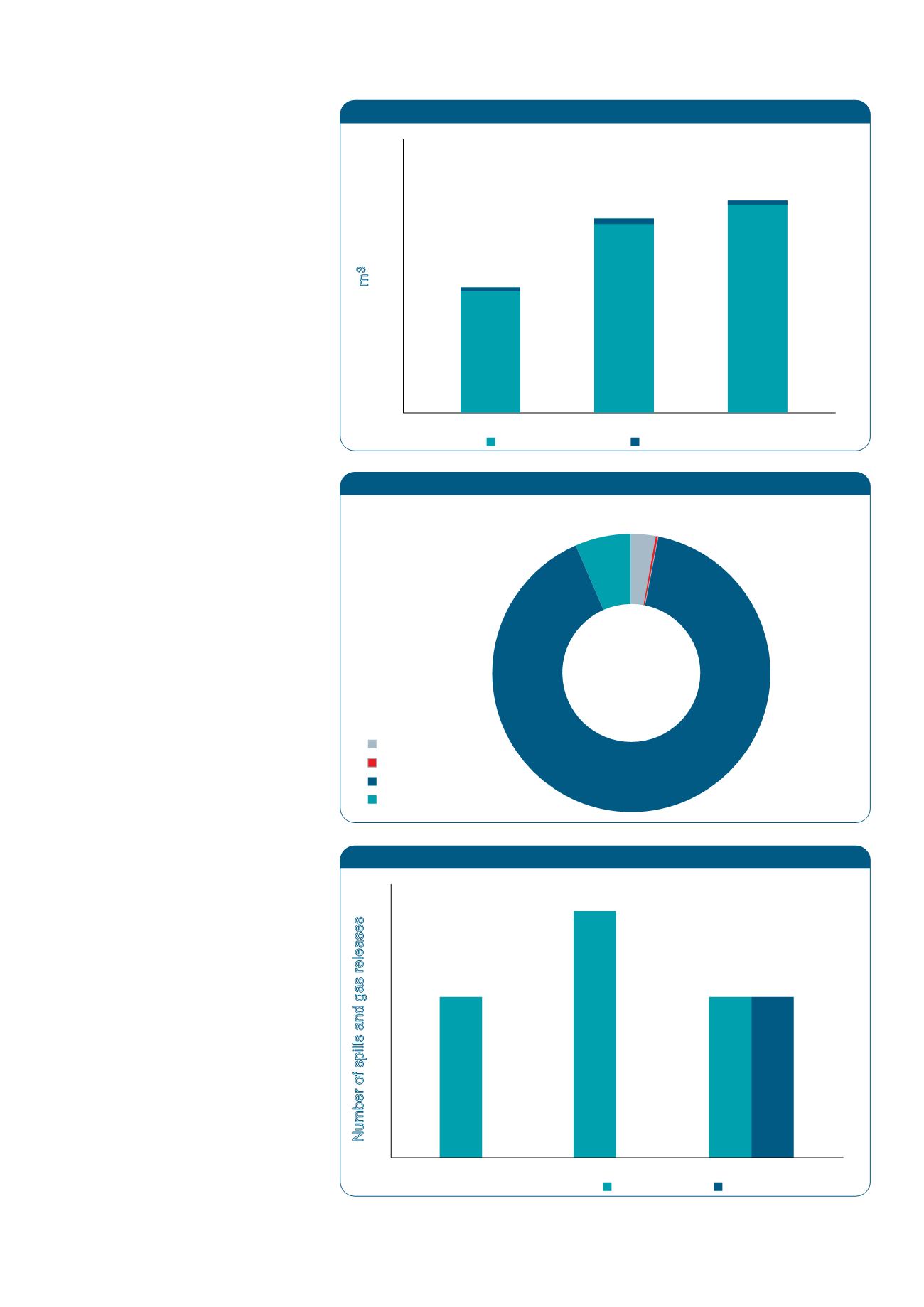
DolphinEnergy had two significant spills
in2008, which accounted for 97% of the
total annual spillage. The first spill was due
to an inadvertent drainage of Disulphide
Oil (DSO) to anopen basin that took place
during the start up of theDSO incineration
unit, and the second spill accrued during a
performance test of the buriedAFFF foam
ringmain, which ruptured.
As a result of these incidents, in 2009
additional measureswere implemented to
reduce the risk of spills and gas releases,
Hazardous andNon- HazardousWaste -2009
178m
3
390m
3
6m
3
5,435m
3
HazardousSolidWaste
WasteOil/Liquids
Domestic/Municipality
Industrial
*Annual QuantitiesSpilled or Released
6.8m
3
309 tons
2.5m
3
0
0
250m
3
3
2
1
0
Number of spills and gas releases
Spills andGasReleases
2007
2008
2009
Number of Spills
Number of GasReleases
7,000
6,000
5,000
4,000
3,000
2,000
1,000
0
2007
2008
2009
m
3
Hazardous andNon - HazardousWaste
5,634
3,597
6,009
Non-HazardousWaste
HazardousWaste
and improve response time tomitigate any
negative environmental impacts. In 2009
therewere no significant spills and the two
acid gas releasesweredue to process
upsetswhich required the emergency
depressurization of theaffectedmodules.


